
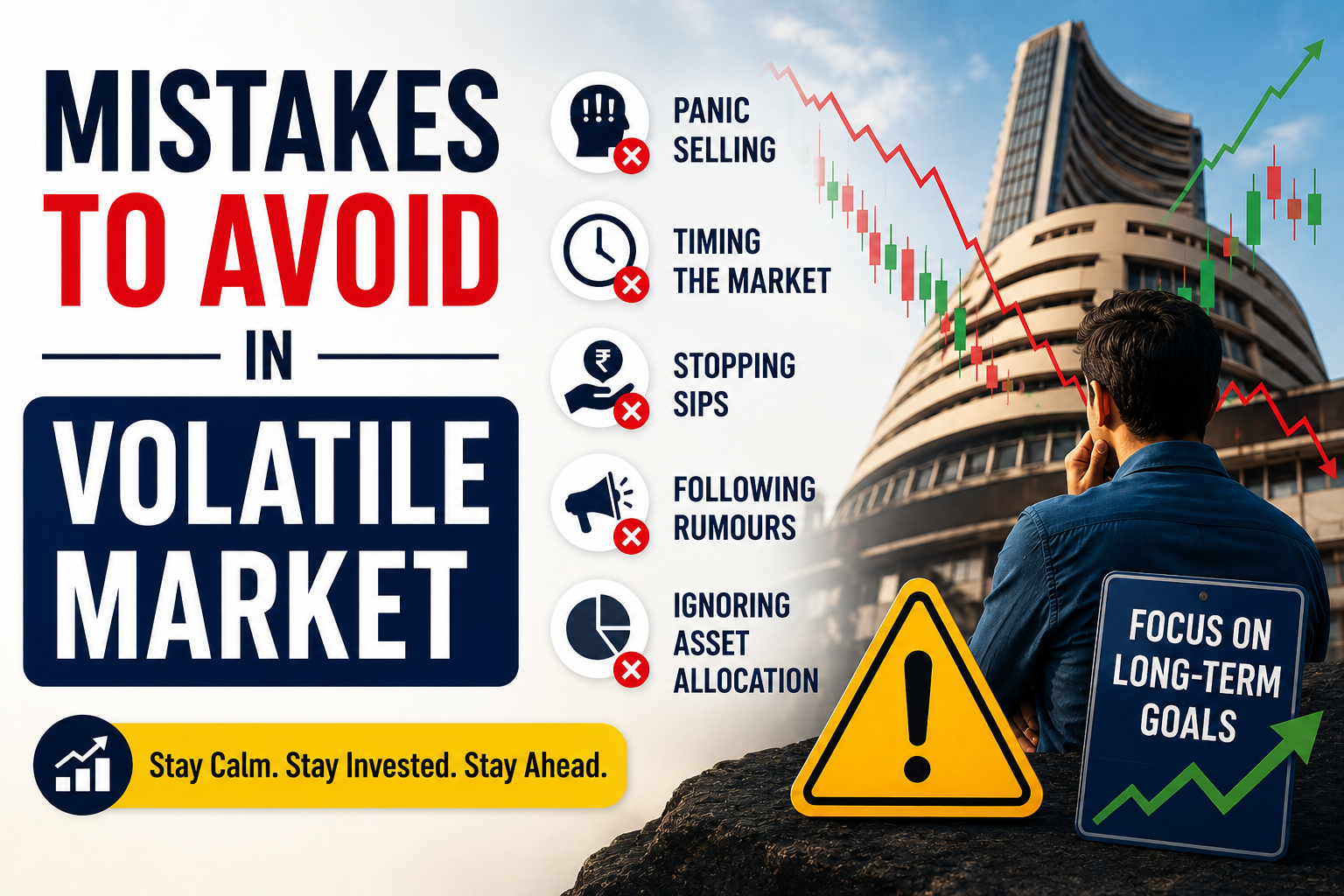
Market volatility is an inevitable part of investing. In the Indian stock market, fluctuations can occur due to global economic events, changes in interest rates, geopolitical developments, corporate earnings or domestic policy decisions. While volatility can create opportunities, it can also lead investors to make emotional and costly mistakes.
Understanding what not to do during turbulent market conditions is often as important as knowing what to do. Here are some common mistakes investors should avoid in a volatile market.
1. Panic selling during market corrections
One of the biggest mistakes investors make is selling their investments out of fear when markets decline sharply. Temporary market corrections are a normal part of the investment cycle. Selling quality investments during downturns may lock in losses and prevent investors from participating in future recoveries.
Instead of reacting emotionally, investors should focus on their long-term financial goals and investment horizon.
2. Trying to “Time the Market”
Many investors attempt to predict the perfect time to enter or exit the market. However, consistently timing the market is extremely difficult, even for experienced professionals.
Missing just a few strong recovery days can significantly impact long-term returns. A disciplined investment approach is generally more effective than trying to predict short-term market movements.
3. Stopping SIPs during market declines
Systematic Investment Plans (SIPs) are designed to help investors benefit from rupee-cost averaging. When markets fall, SIPs purchase more units at lower prices.
Unfortunately, many investors stop their SIPs during periods of uncertainty, missing the opportunity to accumulate units at attractive valuations. Continuing SIPs during volatile periods can be beneficial for long-term wealth creation.
4. Following market rumours and social media tips
In today’s digital age, investors are exposed to countless market tips through social media, messaging groups and online forums. Acting on unverified information can lead to poor investment decisions.
Investors should rely on credible research, professional advice and fundamental analysis rather than market speculation and rumours.
5. Ignoring asset allocation
Volatility often highlights the importance of proper asset allocation. Investors who allocate excessively to a single sector, stock or asset class may experience larger portfolio fluctuations.
A diversified portfolio spread across equities, debt instruments, gold and other suitable assets can help manage risk and improve portfolio stability.
6. Investing without understanding risk
Many investors chase high returns without fully understanding the associated risks. During bull markets, risk can often be overlooked, but volatile periods reveal the true risk profile of investments.
Before investing, individuals should evaluate whether an investment aligns with their financial goals, risk tolerance and time horizon.
7. Overreacting to short-term news
Daily market headlines can create anxiety and encourage impulsive decisions. However, not every news event has a lasting impact on investment fundamentals.
Successful investors focus on long-term trends and business performance rather than reacting to every market update.
8. Neglecting emergency funds
A volatile market becomes particularly stressful when investors need immediate cash. Without an adequate emergency fund, individuals may be forced to redeem investments during unfavorable market conditions.
Maintaining an emergency fund covering at least six months of essential expenses can provide financial security and flexibility.
9. Borrowing to invest
Using borrowed money to invest can amplify gains, but it can also magnify losses. During volatile markets, leveraged positions can become especially risky and may lead to significant financial strain.
Investors should exercise caution and avoid taking excessive financial risks in pursuit of higher returns.
10. Forgetting long-term financial goals
Market volatility often distracts investors from their original objectives. Whether the goal is retirement planning, a child’s education or wealth creation, investment decisions should remain aligned with long-term goals rather than short-term market movements.
Regular portfolio reviews and disciplined investing can help investors stay on track despite market fluctuations.
Conclusion
Volatility is not a sign that something is wrong with the market. It is a natural characteristic of investing. While market fluctuations can be unsettling, they also offer opportunities for disciplined investors. By avoiding emotional decisions, maintaining diversification, continuing SIPs and focusing on long-term goals, Indian investors can navigate volatile markets with greater confidence and resilience.
Remember, successful investing is often less about reacting to market movements and more about staying committed to a well-thought-out investment strategy.